Types of High Heels: UK Styles and Fit Guide
Breadcrumb
What does “types of high heels” really mean?
Types of high heels can sound simple at first, but the category covers much more than one dressy shoe shape. For UK shoppers, it includes heel structure, toe shape, height, fit, and how each style performs in real life. A pair that feels perfect for an evening out may be completely wrong for commuting, wedding venues, or long office days.
That is why this category is best understood as a guide to choosing the right heel for the right purpose. Some shoppers want a classic black court shoe that works across outfits. Others need occasion heels for a wedding guest look, or a stable pair that feels easier to walk in. First-time high-heel buyers often need help with basics like heel height and comfort, while more experienced shoppers may be comparing finer details such as sandal versus pump structure or stiletto versus block balance.
At a category level, the main questions usually come down to:
- Which heel type suits the occasion?
- What heel height feels realistic for your experience level?
- How should the shoe fit for comfort and stability?
- Which black heel styles are most versatile?
This page gives you the wider map of the category so you can shop with more confidence. It is designed to help you understand the main heel families, the fit factors that matter most, and the trade-offs between style, comfort, and wearability before you narrow down to a specific pair.
Which high heel types should you know before you shop?
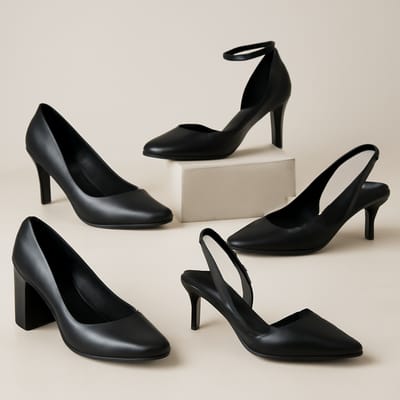
The easiest way to navigate this category is to start with the main high heel types and what each one is best at. Heel design changes not just appearance, but also balance, pressure points, and how easily a shoe works across different outfits.
Key heel styles in the category
- Stiletto heels for a sleek, formal silhouette
- Block heels for better stability and longer wear
- Court shoes or pumps for classic smart dressing
- Heeled sandals for lighter evening looks
- Slingbacks for a polished but slightly less structured feel
- Platforms for added height with a different underfoot angle
For people comparing heel types for stability and wearability, block heels and structured courts are often the easiest starting point. They usually feel steadier than slim stilettos and can suit a wider range of occasions. Event shoppers may still prefer more delicate shapes for visual impact, but the setting matters. Smooth hotel floors, city pavements, garden venues, and dance-heavy evenings all place different demands on the shoe.
Black heels sit at the centre of this category because they are the most adaptable across work, evening, and formal wear. From there, the bigger decisions become heel height, toe shape, and how much support you need. Those finer details are where a shoe moves from looking good in a product photo to feeling right when you actually wear it.
How do heel height, fit, and comfort change your choice?

A high heel is only useful if you can wear it with confidence. That is why fit and comfort matter just as much as silhouette. The wrong height, a narrow toe box, or an insecure heel cup can quickly turn a stylish shoe into one you avoid.
The three fit factors that matter most
- Heel height: low, mid, and high all create different pressure and posture demands
- Toe shape: pointed styles feel sharper, while almond or rounded toes often feel roomier
- Heel structure: a wider base generally provides more balance than a very slim one
First-time high-heel buyers usually benefit from a lower or mid-height heel with a secure upper and sensible base. That gives you a better chance of walking naturally and avoiding early fatigue. More experienced wearers may choose higher styles more comfortably, but even then, occasion length and flooring still matter.
Fit also changes by shoe type. Closed courts can feel narrower than heeled sandals, and two shoes with the same listed heel height may feel very different depending on platform, pitch, and how well the foot is held in place. If you are shopping online, careful sizing notes and indoor try-ons are essential.
In this category, comfort does not mean giving up style. It usually means making smarter choices about where you want drama and where you need support. That balance is what helps a pair feel wearable rather than aspirational.
When should you choose black heels for work, evenings, or events?
Black high heels remain one of the most useful parts of this category because they can shift between professional, dressy, and formal settings with very little effort. A simple black court can work with tailoring for the office, while a strappier heel may suit dinners, parties, and occasionwear more naturally.
The key is matching the style to the setting. For work, closed-toe courts, polished pumps, and lower or mid block heels usually offer the best blend of smart appearance and practical wear. For evenings, sharper pointed toes, slimmer heels, and heeled sandals can create a cleaner, more dramatic finish. Weddings and other long events often call for something in between: elegant, but still stable enough for standing, walking, and dancing.
Event and occasion shoppers often think first about dresses, but shoes can make or break the day. A countryside venue may favour a broader heel base, while a city dinner may let you prioritise a slimmer silhouette. In the same way, office shoes need to handle commuting and repeated wear, not just look polished at your desk.
There is also growing interest in more detailed comparisons within this category, including occasion-based black heel styling, toe-shape comfort, pumps versus sandals, and stiletto versus block wearability. Those topics matter because one black heel profile rarely solves every need equally well. A better wardrobe usually comes from understanding the role each style plays.
How can you shop this category more confidently?
A confident purchase usually comes from a simple decision framework rather than endless scrolling. Instead of browsing every style at once, narrow your options by purpose, comfort needs, and how often you expect to wear the shoes.
A practical way to shortlist high heels
- Start with the occasion: work, evening, wedding, or mixed use
- Choose a realistic heel height based on your experience
- Pick the structure: court, sandal, stiletto, or block heel
- Check fit details like toe room, heel hold, and sole grip
- Think about repeat wear so the pair earns its place in your wardrobe
This approach helps both fashion-led shoppers and more cautious buyers. Someone building a first collection may want one reliable black heel that works with several outfits. Someone comparing stability may focus more on heel base and walking confidence than visual drama. If you shop for events often, versatility matters differently: you may want a dressier style, but still need enough support for hours on your feet.
Other useful topics in this category include how to choose black heels by toe shape and comfort needs, how pumps compare with heeled sandals, whether stiletto or block heels feel more wearable, and how to choose low, mid, or high heels based on experience. Together, those comparisons make the category easier to navigate and help you avoid buying shoes that look right but feel wrong.
What should you remember before buying high heels?
The best high heels are not always the tallest, sharpest, or most dramatic pair on the page. They are the ones that fit your foot, suit your plans, and match the way you actually move through the day. In a category this broad, that simple idea saves a lot of wasted time and disappointing purchases.
Keep these priorities in mind:
- Fit comes before appearance if you want repeat wear
- Heel type changes stability even at similar heights
- Black heels are the easiest versatile starting point
- Occasion matters more than trend-led styling alone
- Comfort features support confidence, especially for newer wearers
For UK shoppers, practical details matter. Pavements, venue surfaces, weather, commuting, and long event days all influence what feels wearable. A shoe that works well indoors for an hour may not be the best option for a full day out or an occasion with lots of standing. That is why the strongest choices usually balance polish with realism.
As you explore this category further, it helps to move from broad questions into narrower comparisons. Occasion-specific black heels, toe-shape guidance, pump versus sandal differences, stiletto versus block wearability, and heel-height choices all deserve focused attention once you know the kind of shoe you need. That step-by-step approach makes the category easier to shop and far more useful in practice.
Frequently asked questions about types of high heels
What are the main types of high heels?
The main types include stilettos, block heels, court shoes, heeled sandals, slingbacks, and platforms. Each one changes the balance between style, stability, and how long the shoe feels comfortable to wear.
Which high heels are best for beginners?
Mid-height block heels and structured court shoes are usually the easiest starting points. They offer more support and balance than very high or narrow stilettos, which helps first-time high-heel buyers feel more secure.
Are black high heels the most versatile option?
Yes, in most wardrobes black high heels are the easiest to style across work, evenings, and formal events. A simple black court or refined block heel often gives the widest outfit range.
How do I choose the right heel height?
Start with your experience level, then factor in how long you will wear the shoes and where you will be walking. Lower and mid heels tend to suit longer wear better, while higher heels are often better for shorter, more dress-focused occasions.
What is better for stability: block heels or stilettos?
Block heels are usually better for stability because they have a wider base. People comparing heel types for wearability often find that block heels feel easier on uneven ground and during longer events.
Are court shoes better than heeled sandals for work?
In many cases, yes. Court shoes usually look more polished for office settings and offer more structure, while heeled sandals are often better suited to evenings or dressier social occasions.
What should event shoppers look for in high heels?
Event shoppers should think about venue surface, time on their feet, heel stability, and how the shoe works with the outfit. A wedding guest heel often needs more support than a pair chosen for a short dinner or night out.
How can I tell if a high heel fits properly?
Your heel should stay secure, your toes should not feel cramped, and the shoe should feel balanced when you walk and turn. If pressure builds quickly or the shoe slips, the fit is likely wrong for comfortable wear.